
The European Parliament
720 members, elected directly every five years, sit in political groups rather than national blocs. It amends and approves laws, votes on the budget and confirms the Commission.
Strasbourg
The European Union explained for curious readers: how the European Union works, who decides what, and the storybook cities where Europe’s rules are made. Come along for the journey.
Start the journey +Europe is run from three small cities within a day's drive of each other. The Commission and the Council sit in Brussels, the Court of Justice works in Luxembourg, and the Parliament meets in Strasbourg. Here are the EU institutions explained one by one.
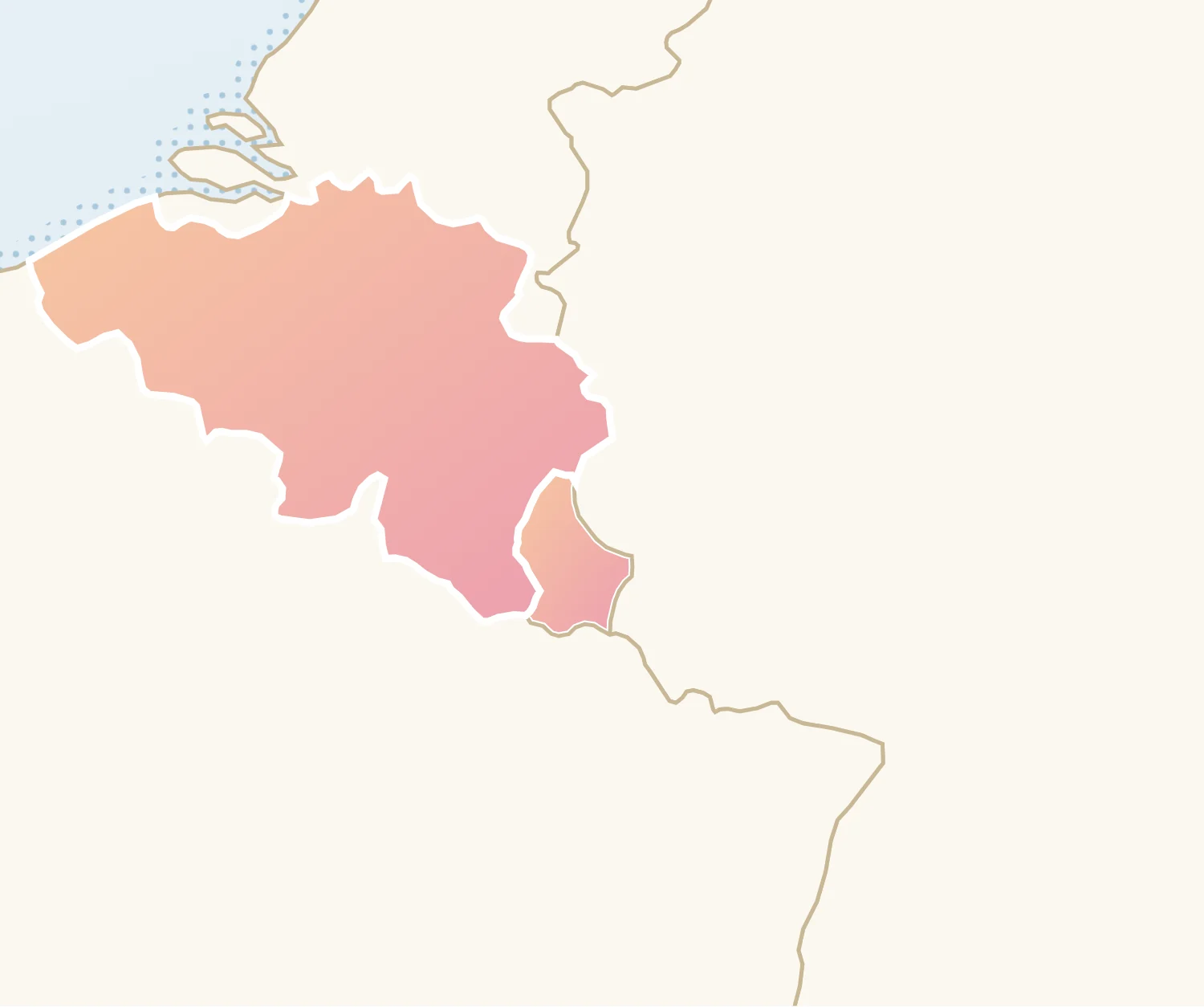
Follow the route: 187 km from Brussels to Luxembourg, another 164 km to Strasbourg.
720 members, elected directly every five years, sit in political groups rather than national blocs. It amends and approves laws, votes on the budget and confirms the Commission.
StrasbourgOne commissioner per member state. It alone proposes new EU laws and checks that existing ones are applied.
BrusselsNational ministers meet by subject; the chair rotates between member states every six months.
BrusselsIt makes sure EU law means the same thing in every country. One judge per member state, plus eleven advocates general.
Luxembourg

Every EU law starts as a Commission proposal written a short walk from the Grand-Place. Ministers then argue it out across the street.
Belgium and the EU

On the Kirchberg plateau above the old town, the Court of Justice answers questions from national judges, and its answers bind them all.
Read more

Twelve times a year the 720 members travel to this Alsatian city of canals and timber-framed houses for their plenary votes.
France and the EUThe European Union explained in one sentence: twenty-seven countries have agreed to make some laws together and to share a single market, while keeping their own governments, armies and most of their taxes. How the European Union works day to day follows from that bargain.
That is how it works in most areas. Foreign policy and taxation still need the agreement of every member state, which is why EU decisions there are slower and often harder to reach. Seen this way, the EU institutions explained above are less a government than a meeting place where national interests are turned into common rules. That, in short, is the European Union explained.
Press play to watch each enlargement, drag through the years, or hover a country to see when it joined.

The European Union is a partnership of 27 European countries that share a single market and make laws together in areas they have agreed on, such as trade, competition, farming and the environment. Each member state keeps its own government and constitution.
The European Commission drafts a proposal, then the European Parliament and the Council of the EU, made up of national ministers, amend and vote on it. The law passes when both agree on the same text. Member states then apply it, and the Court of Justice rules on disputes.
The four you meet most often are the European Parliament, the European Commission, the Council of the EU and the Court of Justice. The European Council, where heads of state or government meet, sets the overall direction, and the European Central Bank runs the euro.
The EU has 27 member states. It began with six founders in 1958, grew to 28 when Croatia joined in 2013, and returned to 27 when the United Kingdom left on 31 January 2020.
Most of them are in Brussels. The European Parliament holds its plenary sessions in Strasbourg, and the Court of Justice sits in Luxembourg, so the EU institutions are spread across three cities within a few hours of each other.
Contents
— 1 —


